
San Augustine 72-Hour Release List
The official sheriff page publishes staff and contact information, but it has no jail roster, release tab, archive, or 72-hour report. There is no official web address for a feed, no stated refresh rate, no list of displayed fields, and no post-release visibility period. The county also gives no basis for assuming a three-day report appears in a mobile app or social channel.
A three-day window remains a useful request format. It captures more than a same-day call and gives the records custodian clear boundaries. Yet it is only meaningful when dates and time zone are explicit. A request made Tuesday morning for “the last three days” can be read differently from a request covering Saturday at 12:00 a.m. through Monday at 11:59 p.m. Central Time.
Check San Augustine Three-Day Releases
The 72-hour method favors a written, reproducible request. It is slower than a call, but it can identify every recorded departure within the chosen interval instead of answering only one name. Use the San Augustine 24-hour release check when the question is limited to today or an immediately changing period.
- Choose fixed boundaries. State exact beginning and ending dates and times in Central Time.
- Call before sending. Reach the San Augustine County Sheriff's Office at 936-275-2424 and confirm the current records custodian and accepted delivery channel.
- Ask for an existing report. Request the jail release report or release log for the defined interval. If none exists, ask which existing records contain those departure events.
- Specify useful fields. Include names, booking numbers, booking and release timestamps, release type, charges and bond, releasing authority, transfer destination, and photograph where public.
- Reconcile each result. Use the proper local clerk for the order or disposition and the receiving agency for any transfer.
For one named person rather than the whole interval, request that person's booking/release sheet. The San Augustine County released inmate lookup provides the full cross-system search path.
San Augustine Three-Day Record Fields
Because no web list exists, these are requested release-record fields, not claims about an online display. Their value lies in separating a real community departure from an administrative or custodial change.
| Requested field | How to read it |
|---|---|
| Name and booking or SO number | Identifies the person and the particular jail episode. |
| Booking and release timestamps | Places the event inside or outside the exact three-day interval. |
| Release type, reason, or code | Indicates bond, time served, court order, sentence completion, transfer, or another result. |
| Charge and bond fields | Points to the court case and the authority that may explain the release. |
| Releasing authority | Helps connect the jail event to an order or legal basis. |
| Receiving agency or destination | Shows continued custody after a county departure. |
| Booking photograph | May be requested as a separate existing record; no county feed publishes it. |
Ask for a movement log when the exact time of physical departure matters. A database timestamp could reflect staff entry, while a signed court order can predate the jail's clearance of other holds and final processing.
San Augustine Weekend Release Window
A 72-hour span is broad enough to cover many weekend questions, but San Augustine County has published no weekend or holiday release schedule. It has not stated whether records are posted later, because no online report exists at all. Do not assume that a Monday request is complete merely because it covers three calendar dates. State the hours, include Central Time, and ask whether the returned record reflects physical departure or an administrative entry.
Timing conflicts should be resolved by custodian. If a court shows a bond order but the jail says housed, the order may still be going through hold checks and release processing. If the jail shows departure to TDCJ, the event is a transfer even if it occurred over the weekend. Record when each source was checked so later updates remain understandable.
Request San Augustine 72-Hour Records
Send a focused Texas Public Information Act request to the San Augustine County Sheriff's Office, 219 N. Harrison, San Augustine, TX 75972. The county posts no dedicated sheriff request form, public-information email, fee schedule, or administrative hours. Call first to confirm the current custodian and whether fax at 936-275-5133 or another electronic route is accepted.
The Texas Public Information Act supplies the statewide framework for access, exceptions, estimates, and Attorney General review.
The statute does not create a San Augustine flat fee or guarantee instant production. Ask for electronic copies, a written estimate, and the legal basis for anything withheld. If extracting a date range would require programming or labor, ask whether a preexisting daily report can be supplied instead.
Match San Augustine Release Orders
The release log establishes what the jail recorded. The related court record explains the legal event. Felony district-court matters begin with the San Augustine District Clerk, county-level misdemeanor matters with the County Clerk, and magistration or relevant lower-level matters with the Justice of the Peace. Regional court service does not move custody of local felony records to a neighboring county.
The county district-court page documents the district courts serving San Augustine County.
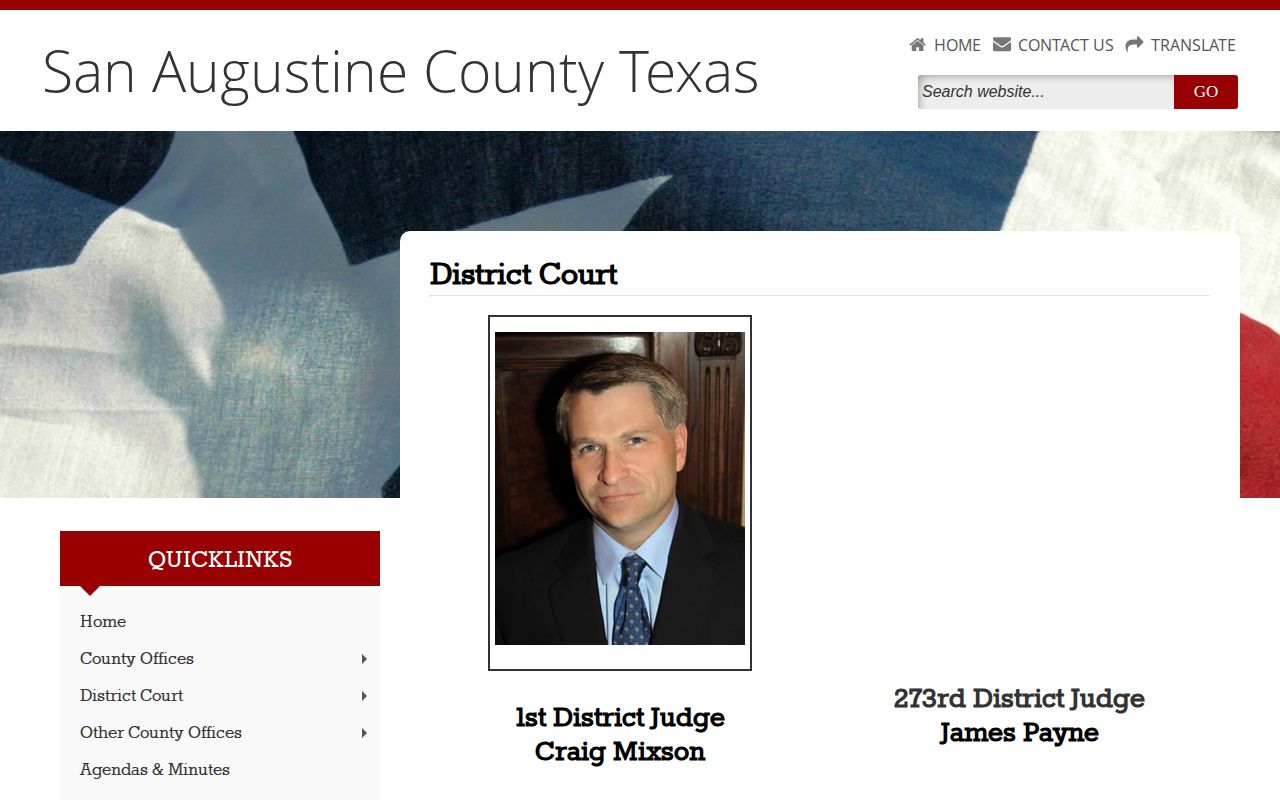
Use the cause number when possible. A bond order, dismissal, judgment, sentence, or community-supervision order gives context, but it should be paired with the sheriff record to establish when county custody actually ended.
No San Augustine Release Archive
The county's lack of a current roster also removes a common fallback: comparing yesterday's roster with today's. There is no official release-date field, archive, or defensible “missing name means released” rule. No online retention period applies because no online jail record was identified.
A person absent from local custody could have posted bond, completed time, received a court order, gone to probation, transferred to TDCJ, moved to another county, entered federal or immigration custody, or experienced another custody-ending event. Ask for the coded mechanism and receiving agency. If the answer is TDCJ pickup, move to the official state offender search. If IVSS-Counties provides an alert and the county participates, treat it as notice to verify, not as the certified 72-hour release record.
State custody has its own evidence chain. Search TDCJ by name and identifiers, open the matching detail, and distinguish current location from projected, scheduled, parole, mandatory-supervision, and discharge fields. A projected date is not proof of completed release. When the public detail is not enough, request incarceration history, a release certificate, or release and discharge information from TDCJ with the person's TDCJ number or other matching details.
Resolve San Augustine Release Conflicts
Different sources can be correct about different events. A county departure record may say transfer while a notification service says released, because the person left one agency but remained in custody elsewhere. A court docket may show the legal authority before the jail records physical departure. TDCJ may show a projected or scheduled date before the completed state release. Resolve the conflict by asking which custodian owns each event.
Begin with the sheriff for county booking, movement, release time, release code, and destination. Use the clerk for the filed court instrument. TDCJ Classification and Records controls state incarceration and release data after pickup. Federal BOP and ICE each control their own custody records. Note the date and time of every check. If identifiers differ, stop the match rather than combining records from two people with the same name.
Keep the returned report with the request boundaries and access date. If a later copy changes, ask the custodian whether the first entry was corrected, supplemented, or merely displayed on a different schedule. That paper trail is more dependable than trying to reconstruct a rolling window after it has moved.